 How often do you take the time to step back and look at the big picture? When a doctor looks at the big picture we use the term “holistic health.” When an economist looks at the big picture we call it “macroeconomics.” Any system can be broken down into its component parts, but without and understanding of the big picture, the larger view, it is very easy to lose the forest for the trees.
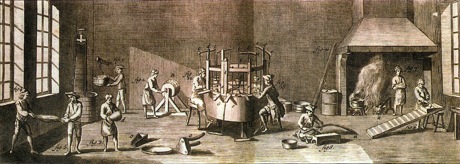
The division of labor is one of the key tenets of capitalism. Adam Smith, in his book Wealth of Nations argued that growth is rooted in he division of labor. Large tasks are broken down into small components and each worker becomes expert in isolated, increasingly specialized areas of production, thus increasing his efficiency.
Smith recognized the downsides to this approach, namely, that people given increasingly repetitive and narrowly focused tasks eventually become dissatisfied by the mundane and boring work. Despite the enormous gains in productivity and efficiency, it can be quite challenging to keep people happy under this regime.
For example, I was speaking with a podiatrist the other day and he mentioned that 90% of what he did was repetitive, primarily dealing with neuropathy in diabetics. He went on to say that he wished he had more variety in his job. The field of medicine is now composed largely of specialists, so much so that it can be challenging to find: (1) a happy doctor and (2) a doctor who thinks or who has received training in a holistic perspective.
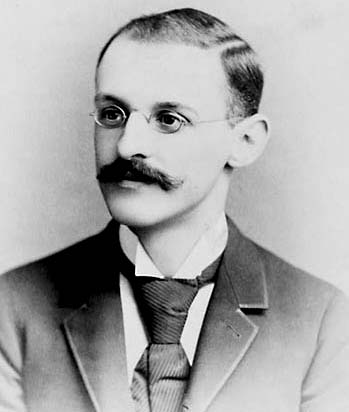
That said, your body is composed of many small parts that are organized into a complex whole. Groups of cells combine to form tissues, tissues arrange themselves into organs and organs work together in systems. The medical model that dominate Western thinking was largely shaped by the Flexner report published in 1910. The report called for the standardization of medical education in the United States and it catalyzed – intentionally or not – the movement toward specialization which now dominates the landscape of the medical system.
One of the challenges facing the authors of the future of medicine is to restore an appreciation for the holistic understanding of the body. So doing will require a depth of collaboration between specialists, not only within the field of allopathic doctors but in and between other systems of medicine, such as Traditional Chinese Medicine, Homeopathy and other alternative and complementary modalities.
I believe that a well-rounded program of education must include a healthy dose of the perspectives of both the specialist and the generalist. The ability to zoom into great detail must be balanced by the capacity for big picture thinking. Granted each person has natural proclivities toward one or the other, but where all are given an appreciation for both perspectives, the likelihood of collaboration and a shared understanding increases dramatically.
As we looked at recently, we need one another. No one person holds all the cards and progress is born through our ability to effectively complement one another. Specialization tends to go awry when specialists establish pecking orders amongst other types of specialists. The idea that “my speciality is more important or prestigious than your speciality” can quickly erode the value inherent in the division of labor that made the system possible in the first place.
We are poised to make a quantum leap in our understanding of how to keep people healthy in an increasingly toxic world, but we must first release the limiting assumptions that have kept the knowledge, information and understanding flowing between the increasingly isolated actors.
Specialists, like islands, are connected to one another if you go down deep enough. It is high time that we remember how important it is to understand the “space between” – the points of connection, the highly complex interrelationships – that have been ignored in the mad push for specialization by those who have prized – for better of for worse – the division of labor into increasingly small and disjointed parts.
By the way, the same thinking applies in virtually every other field of human activity. If we lose sight of the big picture we as a race will eventually miss the point entirely.
 Gregory Hake
Yes, big picture provides context, and context provides a framework of understanding that people need to give their lives, and the efforts within their lives, meaning. Nice points of reflection!
LikeLike
I’m currently having some major health problems and one of my biggest problems is no one knows what the others are doing. Some of the medications I’ve been prescribed exacerbate other health problems I have and their answer is more drugs to take care of the reactions to the other drugs.
I have found I have to be my own medical advocate. I keep track of what each specialist says and make sure they are up to date on what the other specialists say. I also look up my prescriptions on the Internet and see what their contraindications are with reactions and drug interactions. I’ve caught a number of problems before they happened.
I have found all the doctors happy to answer my questions and surprising to me, very relieved I was taking responsibility to understand my treatment.
I’d love one doctor that as you said held all the cards but the blockage there is they seem to be afraid of questioning each other or exposing each other’s mistakes or even ignorance.
Health care is like buying anything, buyer beware!
LikeLike
Everyone needs an advocate! I hope you find your way to health…
LikeLike
Simply put: that which divides also has the potential to connect. A myopic view sees the division; a big-picture view sees the connection. Many of the changes that need to occur in our healthcare system can be driven by the patient. Talk to your doctors; ask them to talk to each other- demand, if necessary, that they talk to each other. Your health is too important to be passive about how others handle it!
LikeLike
I think most people understand this is an issue, but they don’t see any way to change what has become ingrained. Yet all it takes is the collaboration of a few specialists to see a large increase in effectiveness. Hopefully a more successful result will be a large catalyst for change here.
LikeLike
And if the catalysts function correctly, they aren’t consumed in the process!
LikeLike
I like the island analogy. Good food for thought!
LikeLike
Thanks!
LikeLike
I appreciate your thinking here – and this goes along perfectly with your latest posts about collaboration and that we all need one another. I am looking forward to some changes in our medical system, particularly, where the whole person and the whole body is considered and where healthcare providers collaborate with one another to assist their patients to greater health.
LikeLike
It certainly would make for a different kind of doctors visit!
LikeLike
I enjoyed the history you present here. It is amazing how much we rather blindly accept doing something or playing roles where we don’t know the history of how and why it got to the point it is. Having the context of the big picture allows us to play a much more consciously creative part in it. Great post!
LikeLike
That’s the point! Thanks for sharing.
LikeLike