I happened upon an interesting principle that understood and properly applied, can make life much easier. This principle became obvious during a recent horseback riding lesson while working on my trot-canter upward transition. Without boring you with the details, the principle I learned or perhaps better put, rediscovered, is this: the solution does not always lie at the level of the obvious problem, symptom or deficiency.
Having considered something akin to this in my recent post on my company’s blog http://tinyurl.com/3yf9m95, I feel it is “in the air” and therefore worthy of further consideration. Our medical system offers a fine example of what happens when this principle is ignored.
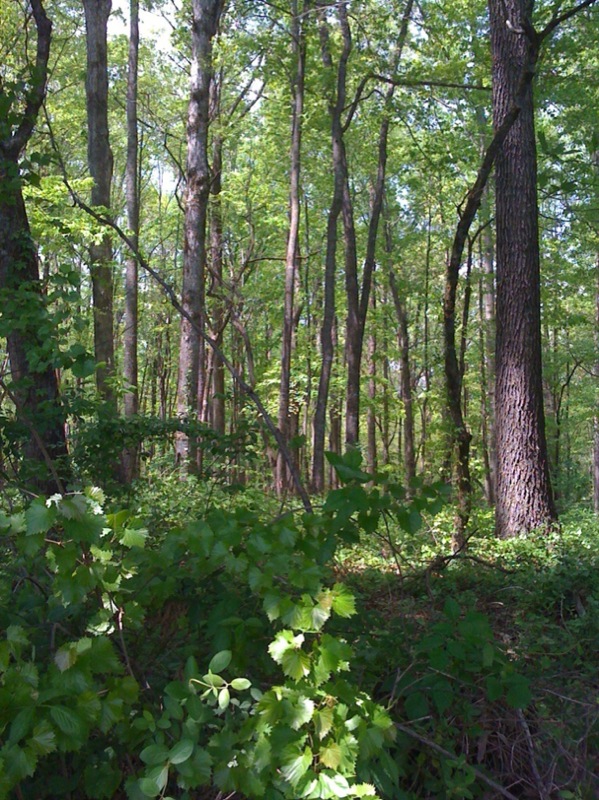 The present system, which could be summarized as the “find-it-and-fix-it” approach, tends to downplay or even ignore the larger context in which the problem is set. A headache, for instance, is often treated with aspirin, and little attention is given to what might be the cause behind the headache. By focusing on the symptom, medical practitioners who work in a highly specialized system often fail to see the forest for the trees.
An equestrian can also easily succumb to this pitfall if he or she is not careful. In the situation I mentioned earlier, the symptom was the horse tending to drop down on his inside shoulder. Focus too much attention on that shoulder and the rider risks missing the many other factors that come into play to bring about the right balance (hind leg impulsion, maintaining the outside side, the rider’s position, etc.).
To live effectively you must view your world holistically. To the degree that your life is compartmentalized and not operating according to a unifying theme, you run the risk of competing elements and as we looked at before, a house divided is not sustainable. Likewise, if you tend to focus or worse, fixate on the things that are not working properly in your life, you will miss the proverbial forest for the trees.
An uncle of mine once used an analogy that has stuck with me for years. If you are driving on a mountain pass and your brakes fail, the worse thing you can do is to focus all of your attention on the failure and to pump the brake pedal obsessively. You need to look up, determine the best path to slow down, stay calm enough to think logically about ways to slow and stop the disabled vehicle. Sitting at my desk I can think of a few ways: drive gently into the bank and use friction to slow down, try the parking brake, downshift, and so on. Anything is better than going over the cliff and suffering a total loss. There are almost always more options than you might think initially.
Another complicating factor in this is that people love to identify a “single-point” scapegoat for just about any problem. Scientists and other interest groups have been desperately seeking to point the finger at a single-point cause for the recent “colony collapse disorder” that has decimated the honey-bee population in North America. This disorder could have a large impact on our food supply, so the problem and the interest in its resolution are real, yet trying to focus on one element, such as the proliferation of power lines, certain pesticides, or other favorite suspects is unlikely to provide a holistic enough approach to reverse the trend.
Where does this leave us this morning? Well, first of all, when you experience a challenge or a problem in your life (it happens, believe me, I saw it on TV once or twice), don’t immediately jump to conclusions about why it happened, who is responsible and what their punishment should be. Take the time necessary to understand the problem in its larger context.
As yourself: what factors are at play, who are the stakeholders and who can help find a solution? These are excellent questions that will help you resolve any issue. Furthermore, always leave room for the fact that your perception may be skewed or incomplete. It never hurts to approach these matters with humility.
The world’s problems are rarely simple anymore and in many cases, neither are the individuals problems that each one of us faces from day-to-day. Our world is more interdependent than ever and determining cause requires persistence, equanimity and a keen eye and ear for the not-so-obvious.
Take care of the world you center in a new and more balanced way today. It will make a difference.


“Heaven is high and earth wide. If you ride three feet higher above the ground than other men, you will know what that means” (Rudolf G. Binding). Horseback riding is a great place to gain appreciation and appreciation involves understanding of the magnitude of something – an excellent place to start viewing our worlds holistically and taking care accordingly (horse not necessary, but appreciation is (-:).
LikeLike
I have found that your blogs have been a beautiful resource that I often return to not only for my own growth but to also help me with my children. I had a wonderful opportunity to discuss “problem solving” skills with my teenage daughter who is soon to graduate from high school. She is scared and very unsure of the adult world that lies before her, and is overwhelmed by the new levels of responsibility that are presenting themselves to her. I have been able to offer her at a young age some amazing tools that without your blog and your inspirational reminders, would not have been at the fore front of my consiousness. The ability to see the “forest through the trees” is a remarkable skill that if understood at a young age can make a huge difference in the lives of our youth and then again to our world and it’s future. Our future depends on the hope that our children will mature beyond what has been the norm today. Thank you on behalf of the lives you are touching!
LikeLike
As a member of the beekeeping community I have a personal and professional interest in colony collapse disorder (CCD), and I actually reference your blog regularly for inspiration and sound perspective on how to approach concerns exactly like CCD, so I appreciate your mentioning it this morning. CCD is a very real concern for our planet, and a perfect example of the need for holistic approach. It is not clear whether any one factor is the cause or whether CCD is brought about by a combination of causes. Certainly there is a need to be aware of any spin put on a cause by one faction or another who may have an axe to grind or some agenda to promote. The press tends to act irresponsibly by headlining a connection between bee losses and the single-point cause-du-jour which can be off-putting. I think one helpful place to start in assuming a holistic approach to the resolution of the problem would be to cease reacting in panic or making assumptions by virtue of what is in the press or conveyed by the glib or the shallow. This would be true for any issue, not just CCD. Seems to me that would be one step in the direction of becoming part of the solution, not the problem.
As always, thanks for your perspective!
LikeLike
Thanks, Gregg. When we react to circumstances it can often feel like we are “driving on a mountain pass and your brakes fail” What a wonderful reminder to pause and consider the various options other than going off the cliff. Taking time out of my world (extended vacation) has really opened my eyes and my heart to the importance of relaxation and enjoyment in my day to day life. It seems to me life is so much easier than we make it out to be. Perhaps the drama has replaced true enjoyment. Your blog stays with me constantly, renewing my perspective. Thank you.
LikeLike
This is really great advice! It is so important to look at any situation with graciousness and that, in itself, can open your eyes to many things you might not have seen before.
LikeLike
Another thing I sometimes see is when there is no obvious solution to a problem, there is a tendency to just give up and go into “vapor lock”. In your brake failing analogy, that would be like not even pumping the brakes and just driving straight over the cliff. While you take the time to search for a balanced solution to a problem that arises, don’t forget to keep living the rest of your life with as much poise and balance as you can!
LikeLike